
The flora of the Great Barrier Reef includes seagrasses, mangroves and island vegetation, as well as marine algae. Coral itself is an animal, although many reef-building corals rely on microscopic algae living within their tissues. Once I began looking beyond the coral gardens, I realised that some of the Reef’s most important habitats are also the easiest to overlook.
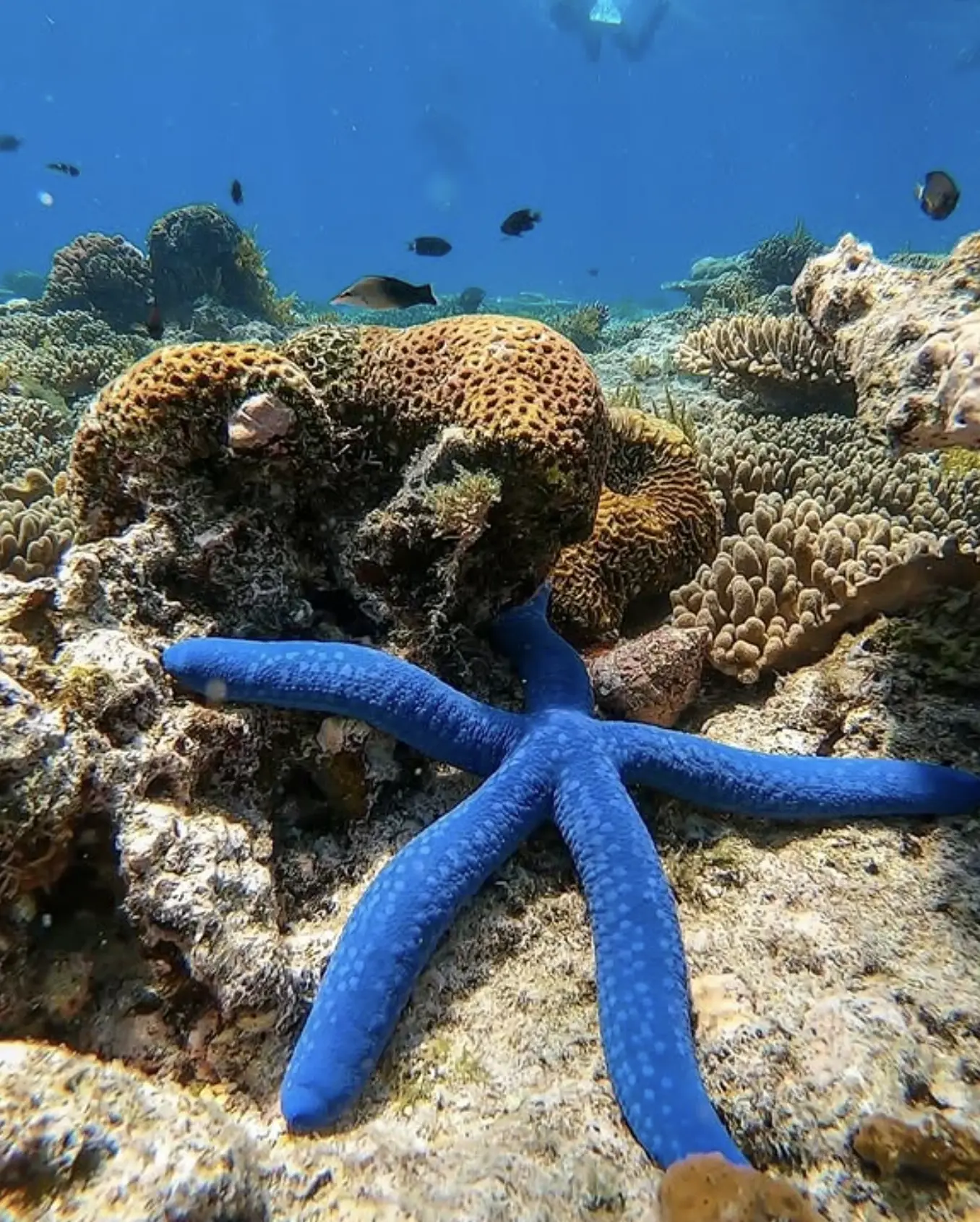
What Grows Across the Reef Ecosystem?
The Great Barrier Reef Marine Park covers approximately 344,400 square kilometres, extending well beyond coral reefs to include continental islands, coral cays and wetlands, as well as mangrove forests, seagrass meadows, estuaries and open ocean.
Most visitors don’t realise coral occupies only part of this vast area. The Reef is better understood as a network of connected habitats, each supporting different species and ecological processes.
Its main plant and plant-like communities include:
- Seagrasses growing across shallow and deeper seabeds
- Mangroves occupying tidal coasts and estuaries
- Terrestrial vegetation on coral cays and continental islands
- Marine algae, including seaweeds and coralline algae
Their distribution is shaped by sunlight, water depth and salinity, as well as the underlying substrate. A muddy estuary, sheltered lagoon and windswept coral cay may all sit within the same Marine Park while supporting completely different plant communities.
Why Coral Is Not a Plant
Coral is an animal, not a plant.
Each colony consists of tiny coral polyps that gradually build the limestone framework of reefs. The confusion arises because microscopic algae live inside many reef-building corals, supplying much of their energy through photosynthesis. When heat or other environmental stress disrupts this partnership, corals may expel the algae, resulting in coral bleaching.
Understanding that relationship changes the way I think about bleaching. It isn’t simply coral losing colour—it’s the breakdown of one of the Reef’s most important biological partnerships.

Seagrass Meadows: An Overlooked Habitat
Seagrasses are flowering marine plants with roots, rhizomes, leaves, flowers and seeds. Around 15 seagrass species occur across the Great Barrier Reef Region, growing in sheltered bays and estuaries, sandy lagoons and deeper offshore waters.
Many snorkellers pass straight over seagrass because it lacks the vivid colours of nearby coral. Yet these meadows feed green turtles and dugongs, shelter juvenile fish and prawns, and stabilise sediment. When cloudy water reduces sunlight, photosynthesis slows, meadows shrink, and wildlife loses both food and shelter.
If turtles are one of your priorities, don’t overlook the darker patches bordering sandy lagoons. They’re often among the Reef’s most productive habitats.

Mangroves: The Coastal Connection
The Great Barrier Reef Region supports more than 40 mangrove species and hybrids growing in estuaries, river mouths and sheltered tidal channels.
Many visitors assume mangroves lie outside the Reef because they encounter them before reaching offshore coral. In reality, they’re an integral part of the ecosystem, providing nursery habitat for fish, trapping sediment and helping protect nearby seagrass meadows and coral reefs.
I think mangroves are among the Reef’s most underrated habitats. Explore them from a boardwalk, kayak or small boat around low tide and you’ll quickly appreciate the remarkable amount of life hidden beneath their roots.
Seaweed, Algae and Reef Recovery
Seaweed is marine algae, not seagrass. The Reef contains green, brown and red algae, including coralline algae that strengthen reef surfaces and create suitable conditions for young corals to settle.
Although macroalgae can compete with coral on disturbed reefs, algae themselves are a natural part of healthy ecosystems. I pay close attention to them while snorkelling because they often reveal how a reef is changing. Pink or purple crusts that appear unremarkable at first glance may actually be coralline algae helping lay the foundation for future coral growth.

Coral Cays vs Continental Islands
Not all Great Barrier Reef islands offer the same experience. Many first-time visitors expect white beaches, rainforest and easy snorkelling everywhere, but the geology beneath each island shapes a very different landscape.
| Feature | Coral cay | Continental island |
|---|---|---|
| Geological base | Coral sand and rubble | Ancient continental rock |
| Typical vegetation | Grasses, vines, shrubs and salt-tolerant woodland | Rainforest, eucalypts and paperbarks |
| Freshwater | Very limited | Streams or deeper groundwater may occur |
| Exposure | High wind and salt spray | More sheltered internal habitats |
| Visitor experience | Open beaches and seabird habitat | Forest walks, hills and varied vegetation |
Coral cays develop on coral sand and reef rubble, so their vegetation has adapted to shallow soils, salt spray and scarce freshwater. Continental islands, by contrast, are former fragments of mainland Australia with deeper soils and taller forests, as well as far greater botanical diversity.
If I were choosing between them, I’d head to a continental island such as Fitzroy or Hinchinbrook for rainforest walks and varied scenery. To understand how reef islands naturally develop, I’d spend time exploring a coral cay instead. Neither is better—they simply reveal different sides of the Great Barrier Reef.

How These Habitats Work Together
The biggest lesson I’ve taken from studying the Reef is that no habitat exists in isolation.
A juvenile fish may begin life among mangrove roots, move into seagrass as it grows and eventually join an adult reef population. Green turtles feed in underwater meadows before travelling through coral habitats and nesting on sandy islands.
The reverse is also true: damage rarely stays confined to one habitat. Mangrove loss reduces nursery areas and allows more sediment to reach coastal waters. Declining seagrass removes food for turtles and dugongs, while the loss of island vegetation increases erosion and reduces seabird nesting habitat.
That’s why protecting coral alone will never protect the entire Great Barrier Reef.
What Threatens Marine and Island Vegetation?
Marine plants face many of the same pressures as coral.
Sediment runoff reduces the sunlight available for seagrass photosynthesis. As meadows decline, dugongs lose feeding grounds and juvenile fish lose shelter. A problem that begins on land can eventually affect wildlife far offshore.
Excess nutrients may encourage macroalgal growth on already disturbed reefs. Cyclones can uproot seagrass, damage mangroves and strip vegetation from low islands, while coastal development may remove mangroves or alter natural tidal flows.
Water clarity is another area where visitors are often misled. Naturally muddy estuaries are not necessarily unhealthy ecosystems. Long-term increases in sediment and nutrients are far more concerning than the temporary turbidity created by tides or river systems.

Where Travellers Can See Each Habitat
If your priority is colourful coral, Reef flora alone shouldn’t determine where you visit. Knowing where these habitats occur, however, makes it much easier to appreciate the Reef as a complete ecosystem rather than simply a collection of snorkelling sites.
| Habitat | Where it occurs | What you may see | Why it matters | Good visitor options |
|---|---|---|---|---|
| Seagrass | Lagoons, bays and sandy shallows | Feeding turtles and underwater meadows | Food, nursery habitat and sediment stability | Green Island, Heron Island and shallow island lagoons |
| Mangroves | Estuaries and tidal channels | Exposed roots, crabs, fish and birdlife | Nursery habitat and coastal protection | Cape Tribulation, Cairns wetlands and Hinchinbrook Channel |
| Rainforest | Continental islands | Dense forest, vines and eucalypts | Island biodiversity and soil stability | Fitzroy Island and Hinchinbrook Island |
| Coral-cay vegetation | Low sandy islands | Shrubs, pandanus and seabirds | Sand stabilisation and nesting habitat | Lady Elliot Island and other coral cays |
| Marine algae | Reef flats and coral surfaces | Green, brown, red and pink growth | Reef productivity and coral recruitment | Most snorkelling and glass-bottom boat sites |
Most habitats can be explored year-round, with water clarity, tides and recent weather influencing visibility far more than the season itself. Calm, sunny conditions make seagrass easier to spot, while low tide exposes mangrove root systems.
Avoid standing on marine vegetation or collecting plants and algae.
I wouldn’t plan a trip around Reef flora alone, but understanding these habitats makes every snorkel, island walk and coastal stop considerably more rewarding.
Common Misconceptions
Several common Reef misconceptions prevent visitors from fully appreciating the Great Barrier Reef.
Coral is an animal, while seagrass is a true flowering plant rather than seaweed. Mangroves are equally misunderstood. Although they grow along the coast, they are part of the Reef ecosystem, protecting nearby coastal habitats while providing nursery grounds for fish.
Algae are also widely misinterpreted. Their presence does not automatically indicate reef damage. Many algae are essential to healthy reef systems, and pink and purple reef-building algae play an important role in helping young corals establish.
It’s equally easy to assume the brightest habitats are the most valuable. In reality, underwater meadows and tidal forests may appear less spectacular than coral gardens, yet they underpin many of the ecological processes that keep the Reef functioning.


Practical Tips for Noticing Plant Life
To appreciate more than colourful coral, spend time looking at the habitats between reef bommies.
Watch for dark underwater meadows where turtles feed, explore island walking tracks, visit mangroves around low tide, and don’t dismiss pink or purple crusts on reef surfaces—they may be supporting reef recovery.
If your itinerary allows, visit both a coral cay and a continental island. Seeing how geology shapes completely different plant communities is one of the easiest ways to understand the Reef as an interconnected marine ecosystem rather than a collection of coral reefs.
Why These Habitats Matter
Before I began learning about the Great Barrier Reef, I saw plants as little more than a backdrop to coral. The more I understood the ecosystem, the clearer it became that seagrass, mangroves, algae and island vegetation provide the ecological foundation that allows coral reefs to thrive.
Seagrass feeds turtles and dugongs, mangroves shelter juvenile fish, algae contribute to reef growth, and island plants stabilise sand while supporting seabird colonies. Coral may be the Reef’s main attraction, but these connected natural habitats make the entire ecosystem possible.
If you’re exploring the region with Great Barrier Reef Tours, understanding these habitats changes the way you experience the Reef. You’ll notice turtles feeding over seagrass, recognise mangroves as part of the same ecosystem rather than separate coastline, and appreciate why seemingly ordinary habitats deserve as much attention as colourful coral gardens.
FAQ
What plants live on the Great Barrier Reef?
The Reef’s main true plants are seagrasses, mangroves and island vegetation found on continental islands and coral cays. It also supports diverse marine algae, commonly known as seaweed.
Is coral a plant or an animal?
Coral is an animal made up of tiny polyps. It is often mistaken for a plant because many reef-building corals live in partnership with microscopic photosynthetic algae that supply much of their energy.
What is the difference between seagrass and seaweed?
Seagrass is a flowering marine plant with roots, leaves and seeds. Seaweed is marine algae, which lack true roots and flowers. Although both photosynthesise, they belong to entirely different biological groups.
Which Great Barrier Reef destinations are best for seeing different plant habitats?
Green Island and Heron Island are excellent for underwater meadows, while Cape Tribulation, the Cairns wetlands and Hinchinbrook Channel are known for tidal forests. Fitzroy Island combines rainforest with coastal vegetation, and Lady Elliot Island is one of the best places to experience a vegetated coral cay.
Why should travellers care about Reef plants?
Reef plants explain how the ecosystem functions. These habitats support turtles, dugongs, fish and seabirds, helping visitors appreciate the Great Barrier Reef as an interconnected system rather than simply a collection of coral gardens.