
Gold Coast Travel Guide
The Gold Coast lives between two very different landscapes. Along the Pacific, Surfers Paradise, Burleigh Heads and the southern surf beaches unfold beneath a skyline of towers and headlands. Turn inland, and the city quickly falls away, replaced by waterfalls and winding mountain roads and the rainforests of the Gold Coast Hinterland.
The region lies within the Yugambeh Language Region, the Country of its Traditional Custodians. At Burleigh Heads, the Jellurgal Aboriginal Cultural Centre offers a way to explore this continuing cultural connection to the landscape.
- 2 hours
- 2 hours

- $ 174.00 AUD
- $ 164.50 AUD
- Full Day
- 6 Hours (approx.)

- $ 110 AUD
- $ 99 AUD
- 1 Hour
- 60m
- $ 124.00 AUD
- $ 114.50 AUD
- 4 hours
- 240 min. (approx.)

- $ 399,00 AUD
- $ 379,00 AUD
- Half day
- 90 min.

- $ 89.00 AUD
- $ 79.00 AUD
- Full Day
- 6 Hours

- $ 185 AUD
- $ 165 AUD

Coastline & Beaches
Surfers Paradise Beach runs beneath the Gold Coast’s most recognisable high-rise skyline, with hotels, restaurants and nightlife close to the sand. High above, the SkyPoint Observation Deck looks across the coastline from Q1, while the Q1 SkyPoint Climb takes the experience outside the tower.
Further south, Burleigh Beach meets the forested slopes of Burleigh Head National Park. The walk towards Tumgun Lookout moves between rainforest and Pacific views, while Tallebudgera Creek provides sheltered water on the southern side of the headland.
Surf culture becomes more prominent beyond Burleigh. Currumbin Beach sits beside Currumbin Creek, followed by Kirra Beach, Rainbow Bay and Snapper Rocks, home to some of the region’s best-known surf breaks. Back towards the centre, Kurrawa Beach and Main Beach extend the choice of urban beaches.

Hinterland Escapes
The Gold Coast Hinterland rises from the coastal plain into forested ridges, valleys and waterfall country.
Tamborine Mountain, also known as Mount Tamborine, combines villages and lookouts with short rainforest walks through pockets of Tamborine National Park.
For longer walks and rainforest, Lamington National Park is the stronger option. Its tracks enter the Gondwana Rainforests of Australia World Heritage Area, with Elabana Falls lying along one of the park’s better-known waterfall walks.
High escarpments and deep valleys shape Springbrook National Park, where Purling Brook Falls forms one of the hinterland’s defining waterfalls. Further south, Currumbin Valley leads inland to the Currumbin Rock Pools, bringing freshwater swimming into a landscape of forest and rocky creek beds.

Dining & Nightlife
Surfers Paradise has the greatest concentration of Gold Coast nightlife, with restaurants, bars and entertainment clustered behind the beachfront.
Dining takes centre stage in Broadbeach, where restaurants and bars are located near the ocean and Pacific Fair Shopping Centre. Burleigh Heads, further south, settles into a more relaxed rhythm: the beach, parkland and dining areas are close enough that an afternoon beside the water flows naturally into dinner.
Beyond the restaurant strips, HOTA, Home of the Arts, brings exhibitions, performances and cultural events into the mix.

Water Sports
Surfing on the Gold Coast is stitched into the identity of the region. Beginners can find lessons along more manageable beaches; experienced surfers tend to head for the famous southern surf breaks around Snapper Rocks, Rainbow Bay and Kirra. Swell, crowds, water temperatures and individual ability matter more than the reputation of any particular break.
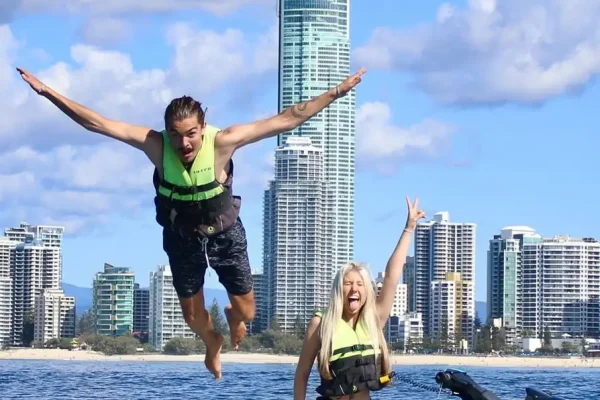
There is another water world behind the beaches. Rivers and residential canals create room for Jet Skis, kayaking and stand-up paddleboarding and waterway cruises, while the coastal creeks offer sheltered water minutes from the open Pacific.

Travel Logistics
Gold Coast Airport is the most convenient gateway for the southern beaches. Brisbane International Airport makes more sense when the Gold Coast is part of a wider South East Queensland trip.
Along the developed coastline, Gold Coast public transport is useful. TransLink buses and the G:link tram system connect major urban precincts, particularly Surfers Paradise and Broadbeach, making a coastal holiday without a car practical.
Inland, the equation changes. Tamborine Mountain, Springbrook, Lamington and Currumbin Valley are scattered across winding hinterland roads beyond the main coastal transport network. A car gives far more freedom here, and dedicating a day to the hinterland avoids repeated travel between the mountains and beaches.
For families, Sea World, Warner Bros. Movie World, Wet’n’Wild Water World and Currumbin Wildlife Sanctuary are substantial enough to fill a day rather than be squeezed between unrelated stops.
Travellers with mobility requirements should check for currently available accessible accommodation and mobility maps and beach wheelchair services in their specific areas. Appropriate travel insurance for adventure activities or substantial prepaid bookings is also worth considering.

How To Experience The Gold Coast
A first trip can begin among the towers and sand of Surfers Paradise or Broadbeach, then follow the coast south as the skyline gives way to Burleigh’s headland, Currumbin’s creek and the surf country around Kirra and Rainbow Bay.
Give another day to the hinterland. Tamborine Mountain offers villages, lookouts and shorter forest walks; Springbrook brings waterfalls and escarpments; Lamington leads deeper into rainforest and longer walking country.
Between the two lies the Gold Coast that’s easiest to miss when an itinerary becomes a checklist: mornings beside the Pacific, an afternoon on sheltered water, forest within reach of the skyline and mountain roads climbing into a landscape that feels much further from the beach than it really is.
FAQ
How many days do you need on the Gold Coast?
Three to five days is a practical first trip, allowing enough time for the beaches, one hinterland day and a major attraction or water activity. Stay longer if you want to combine several theme parks with surfing, longer walks or slower beach days.
What is the best area to stay on the Gold Coast?
Surfers Paradise suits travellers who want beach, nightlife and easy transport close together, while Broadbeach combines the coast with dining and shopping. Burleigh Heads has a more relaxed beachside atmosphere; the southern Gold Coast is well-suited to travellers more interested in surfing than nightlife.
Can you visit the Gold Coast without a car?
Yes, particularly for a coastal holiday. The G:link tram system and buses connect major Gold Coast urban areas, including Surfers Paradise and Broadbeach. A car is much more useful for Tamborine Mountain, Springbrook and Lamington, where attractions and walking areas are spread out beyond the main coastal public transport network.
Is the Gold Coast just beaches and theme parks?
No. Beyond the beaches and major attractions, the region includes rainforest, waterfalls and mountain walking in the hinterland. Tamborine Mountain, Springbrook and Lamington can each provide a full day away from the coast.
Which Gold Coast beach is best for a first visit?
There is no single best choice. Surfers Paradise Beach delivers the classic Gold Coast skyline and easy access to entertainment; Burleigh Beach combines swimming with a forested coastal headland; Kirra Beach, Rainbow Bay and Snapper Rocks put travellers closer to the southern Gold Coast’s surf culture.


Experience The Best Of Brisbane
The river is the natural place to start. Ferries and bridges connect the two banks, while riverside walking paths lead between gardens, restaurants and city views.
South Bank Parklands sits directly opposite the Brisbane CBD, bringing together around 15 hectares of parkland, Streets Beach and the Queensland Cultural Centre. Across the river, Queen Street Mall and the 18-hectare City Botanic Gardens offer a mix of busy city streets and quieter waterfront spaces.
Kangaroo Point has some of the best views of the Brisbane skyline and Story Bridge. Nearby, Howard Smith Wharves brings dining and riverside spaces beneath the bridge. New Farm, Fortitude Valley and West End add another mix of parkland, nightlife, leafy streets and charming cafés.

See Brisbane Beyond The City Centre
West of the CBD, Mt Coot-tha Reserve is the place for bushwalking trails, outdoor adventures and panoramic city views, with the 56-hectare Brisbane Botanic Gardens Mt Coot-tha adding another reason to spend time on this side of the city.
Head east and Brisbane meets the bay. Wynnum and Manly have a quieter, more laid-back waterfront feel than the surf coast to the north and south. Further out, Minjerribah (North Stradbroke Island) and Mulgumpin (Moreton Island) bring beaches, walking trails, wildlife and wilder coastal scenery.
Travel inland instead and the Scenic Rim brings mountains, national parks and access to World Heritage-listed rainforests, putting very different landscapes within easy reach of the city.

Food, Art And Culture In Brisbane
South Bank is Brisbane’s main cultural hub. The Queensland Cultural Centre brings the Queensland Art Gallery, Gallery of Modern Art, Queensland Museum, State Library and Queensland Performing Arts Centre together in one convenient riverside cultural precinct. GOMA is also home to the Australian Cinémathèque, where film screenings sit alongside the galleries and exhibitions.
Food and nightlife are more spread out. South Bank works well for riverside dining, while Fortitude Valley mixes restaurants, bars and live music. New Farm has a more relaxed neighbourhood feel built around cafes, and West End is known for independent eateries and a broad mix of international cuisines. Whether the plan is a riverside meal, a night out or a laid-back Brisbane brunch, there are plenty of options.
Brisbane is compact enough to mix art, culture, food and markets into the same day of sightseeing. There is little reason to separate them into dedicated days when the city’s main inner-city precincts fit together so easily.

Make Time For Brisbane
2 to 4 days in Brisbane is a good amount of time for a first visit. Two days gives you enough time to explore the river, South Bank Parklands, the city centre and surrounding neighbourhoods. A third leaves room for Mt Coot-tha or the bayside, while four days makes it easier to add an island trip, the coast or hinterland.
Summer is the hottest and most humid time of year, autumn is milder, winter brings cooler days and evenings, and spring in Brisbane warms up as the jacarandas begin to flower.
You don’t really need a car around central Brisbane. Trains, buses and ferries cover much of the city, while South Bank, the city centre and nearby neighbourhoods are easy to explore on foot. A car becomes more useful for day trips from Brisbane to the coast, hills and surrounding regions.
Accommodation ranges from luxury riverside hotels and central city stays to boutique hotels and apartments in the inner suburbs. That leaves plenty of choice between nightlife, river views and a quieter base.