
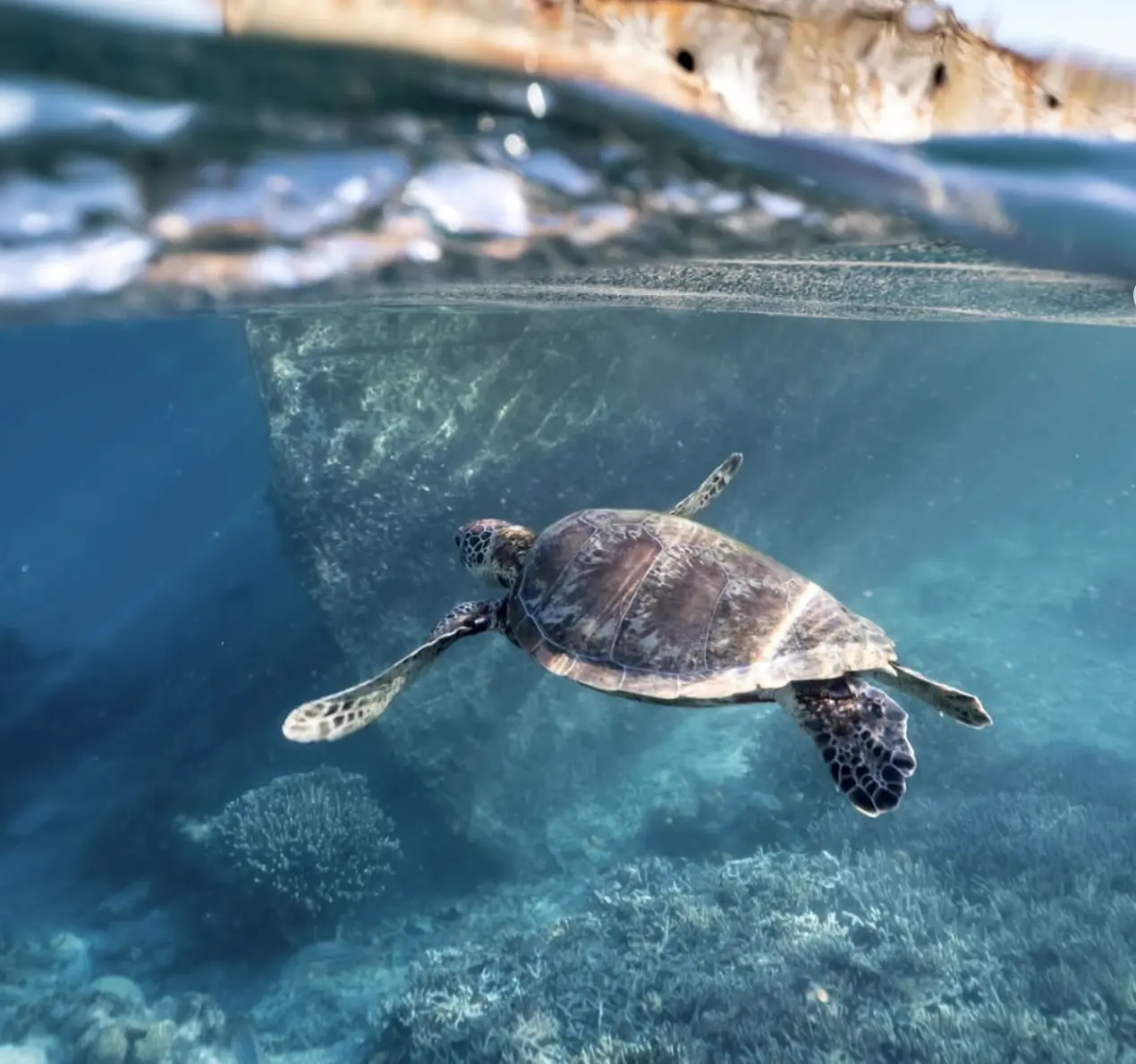
Turtles occur throughout the Great Barrier Reef, but sightings depend more on habitat and tour design than on choosing the most famous destination. Green turtles dominate encounters around shallow reef flats, lagoons and seagrass meadows, while hawksbills are more closely associated with coral structures. Loggerheads occur in the region but are less predictable on ordinary snorkelling trips.
If turtles are a priority, I would choose an island stay at Lady Elliot Island or Heron Island, where repeated snorkelling sessions provide better odds than a single reef cruise. Green Island, Fitzroy Island and Low Isles are easier day-trip options, but sightings remain variable. Turtles can be seen underwater year-round; nesting and hatching require a summer-focused itinerary.

Can You See Turtles on the Great Barrier Reef?
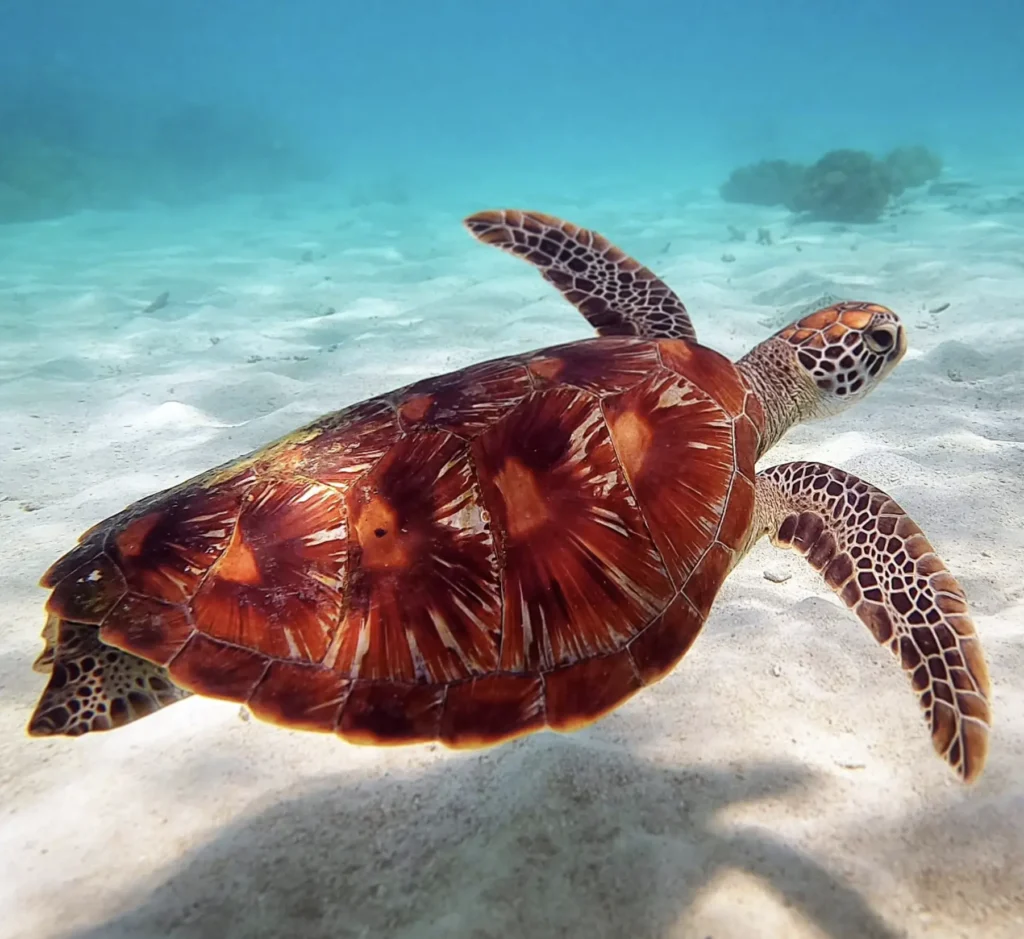
Six of the world’s seven marine turtle species occur within the Great Barrier Reef Marine Park, which covers about 344,400 km². They are widespread but unevenly distributed because each species relies on different habitats. For most visitors, green turtles are by far the most common sighting, as they feed in the shallow lagoons, reef flats and seagrass meadows frequently visited by snorkelling tours.
Which Turtle Species Live Here?
All six Australian marine turtle species are nationally protected. Green, hawksbill and flatback turtles are listed as vulnerable under the EPBC Act, while loggerhead, olive ridley and leatherback turtles are listed as endangered.
| Species | Indicative adult size | EPBC status | Visitor likelihood |
|---|---|---|---|
| Green turtle | Up to about 1.2 m; large adults may exceed 150 kg | Vulnerable | High in suitable shallow habitat |
| Hawksbill turtle | Commonly 70–90 cm; often 40–80 kg | Vulnerable | Moderate to high around coral |
| Loggerhead turtle | Commonly 80–110 cm; often 70–170 kg | Endangered | Low to moderate |
| Flatback turtle | Commonly 80–100 cm; often 70–100 kg | Vulnerable | Low on standard reef tours |
| Olive ridley turtle | Around 60–80 cm; often 35–50 kg | Endangered | Very low |
| Leatherback turtle | Commonly 1.3–1.8 m; several hundred kilograms | Endangered | Extremely low |
These are broad biological ranges, not field-identification rules. Leatherbacks are much larger than hard-shelled species and can exceptionally approach 900 kilograms, but they are not realistic targets for a standard Reef tour.
Why Are Green Turtles Seen Most Often?
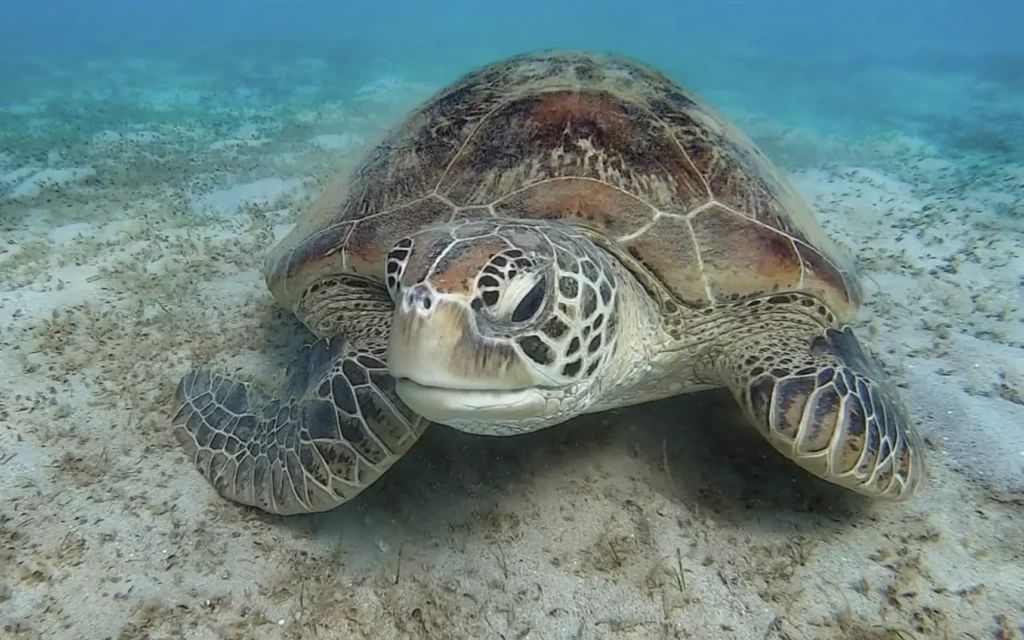
Green turtles dominate visitor encounters because their feeding habitat overlaps with accessible snorkelling sites. Juveniles and adults commonly use sheltered lagoons, reef flats and seagrass meadows, where they may remain visible while grazing.
Loggerheads forage across a broader range of habitats and often target hard-shelled prey in deeper or less accessible areas. They are important to Queensland’s turtle populations but are less reliably concentrated at popular shallow snorkelling sites.
This is why a traveller may see several green turtles above a seagrass bed yet never encounter a loggerhead. The difference reflects habitat use rather than simple abundance.
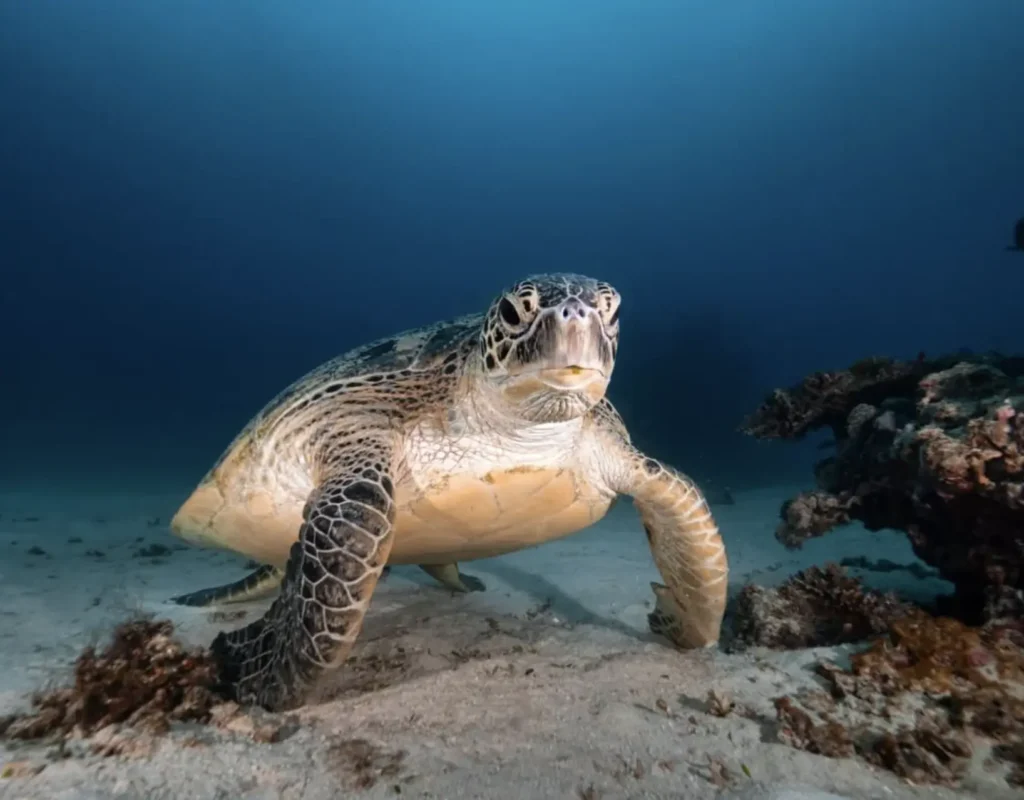
Hawksbills are more often associated with coral bommies and reef walls, where they search crevices for food.
Why Habitat Matters More Than Coral
Many travellers assume the healthiest coral site must also be the best turtle site. That is not always true.
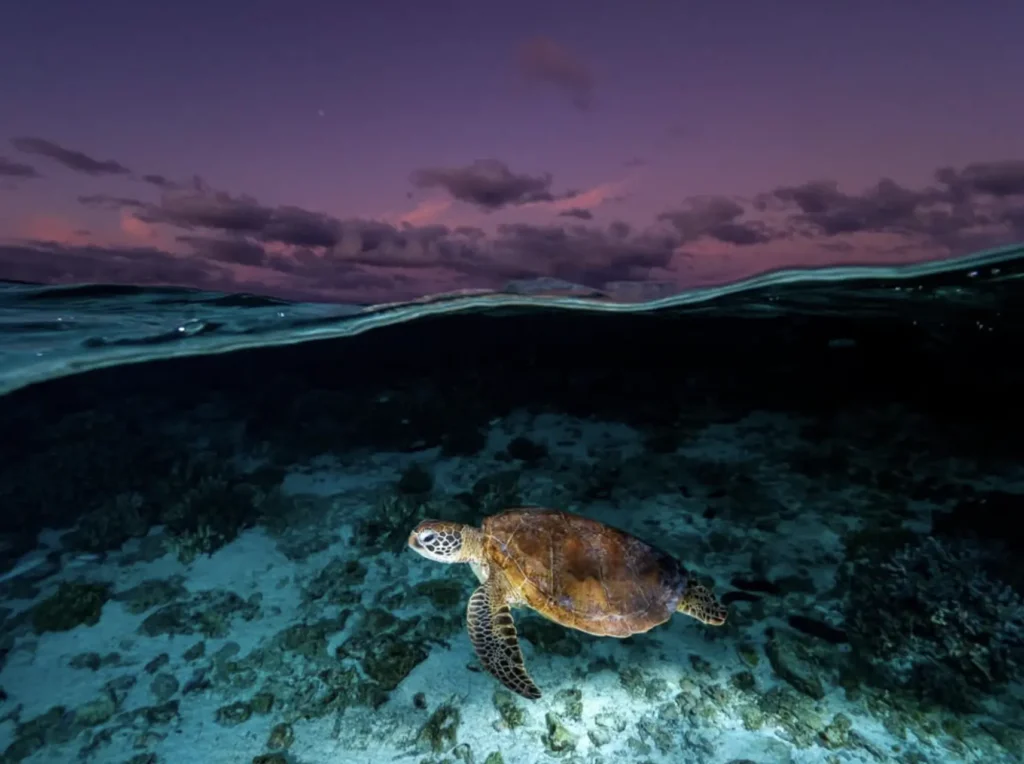
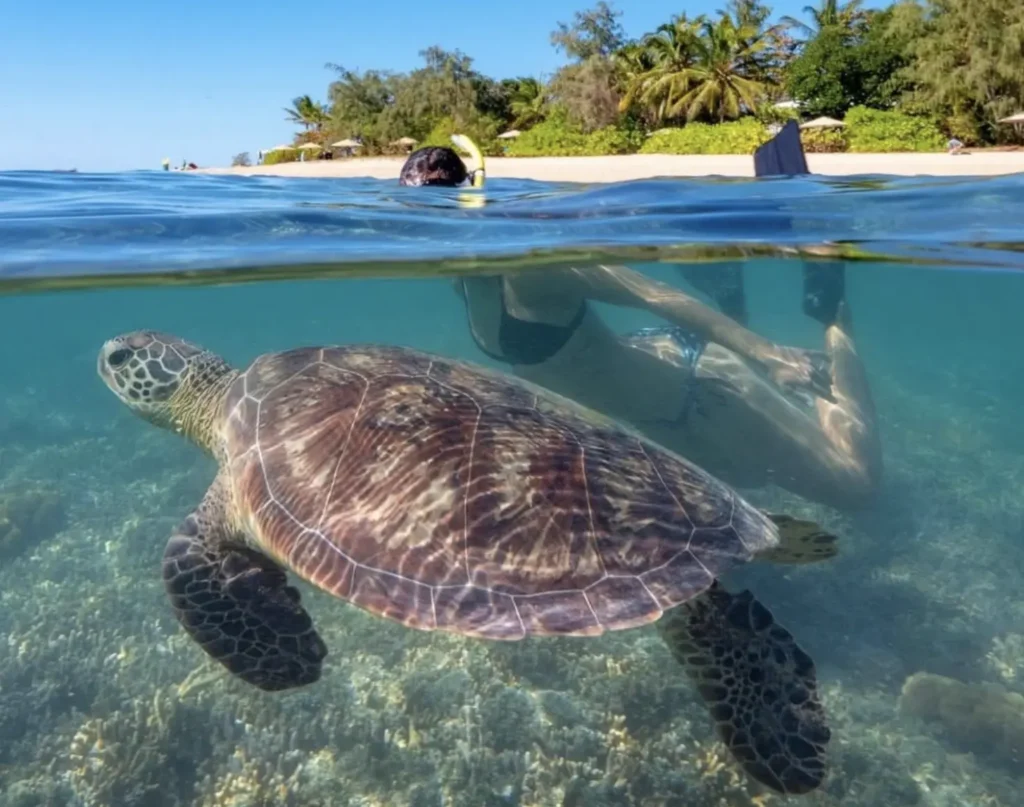
Adult green turtles depend heavily on seagrass and algae. Shallow feeding grounds also make them easier to observe: a turtle grazing in two or three metres of water may remain visible for several minutes, while one on a deep outer-reef wall can disappear beneath a ledge or beyond snorkelling depth.
The practical distinction is simple:
- Choose shallow lagoons, reef flats and seagrass beds if turtles are the priority.
- Choose outer reefs if coral diversity, diving and broader marine life matter more.
Healthy seagrass is therefore as important as coral for turtle survival. Damage to feeding grounds can reduce turtle carrying capacity even where nearby reefs remain visually impressive.
Where Are You Most Likely to See Turtles?
If turtles are your main priority, Lady Elliot Island offers one of the strongest visitor experiences. Its fringing reef allows repeated shore snorkelling, greatly improving your chances of encounters, while summer also brings nesting and hatchlings.
Heron Island is similarly rewarding, with excellent shore snorkelling and important nesting beaches. Staying overnight allows multiple snorkelling sessions at different tides.
For day trips, Low Isles is a great choice from Port Douglas thanks to its sheltered lagoon, while Green Island is the easiest option from Cairns, although it is usually busier. Fitzroy Island offers more independent snorkelling, but conditions vary with weather.
An outer-reef cruise can certainly include turtle sightings, but they are incidental rather than the focus. If turtles are your main goal, reef islands generally provide more reliable encounters than a single offshore cruise.
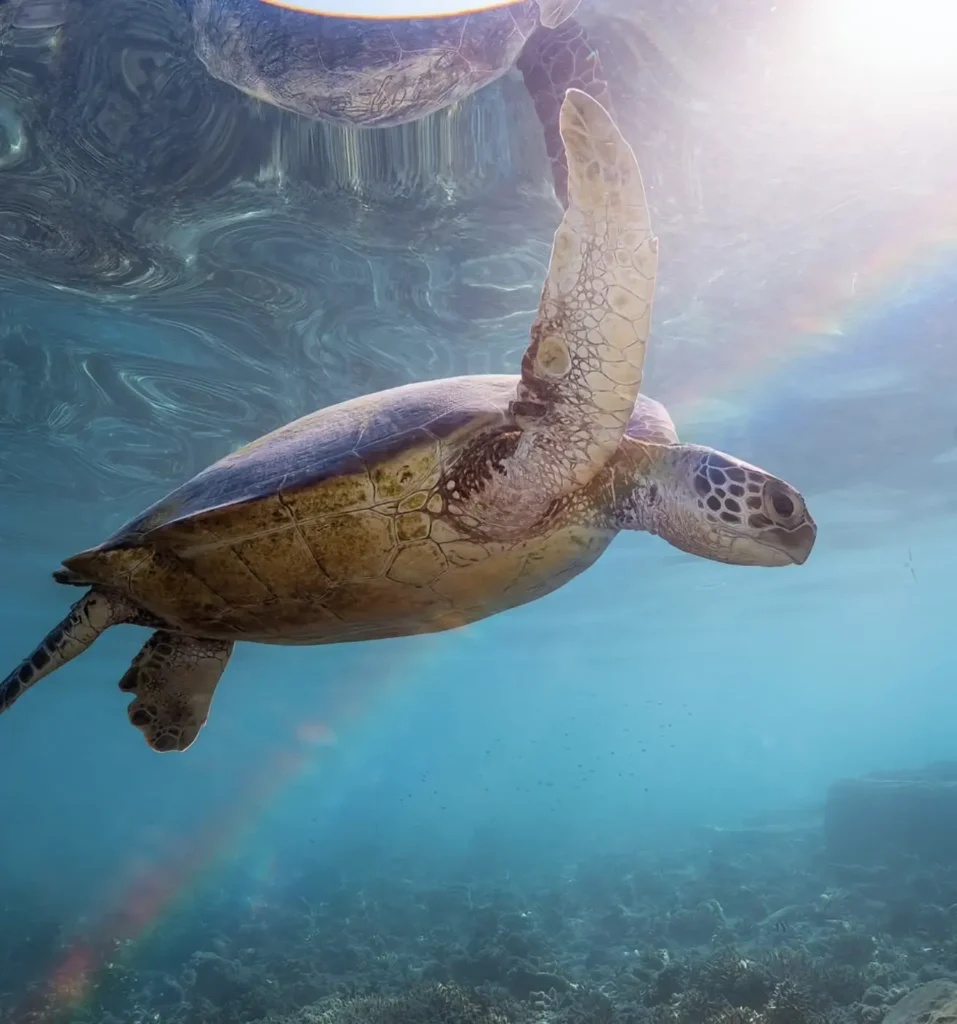
Why Island Stays Beat Day Cruises for Turtle Watching
Island stays allow multiple snorkelling sessions across different tides and weather conditions instead of relying on one scheduled stop. That flexibility usually improves encounter rates more than choosing a particular tour operator.
The trade-off is cost. If turtles are your main reason for visiting, the extra expense may be worthwhile. If they are simply one part of your Reef experience, a quality day trip often represents better value.
When Should You Visit?
Turtles may be seen underwater throughout the year. Nesting and hatching are seasonal and vary by species, latitude and island.
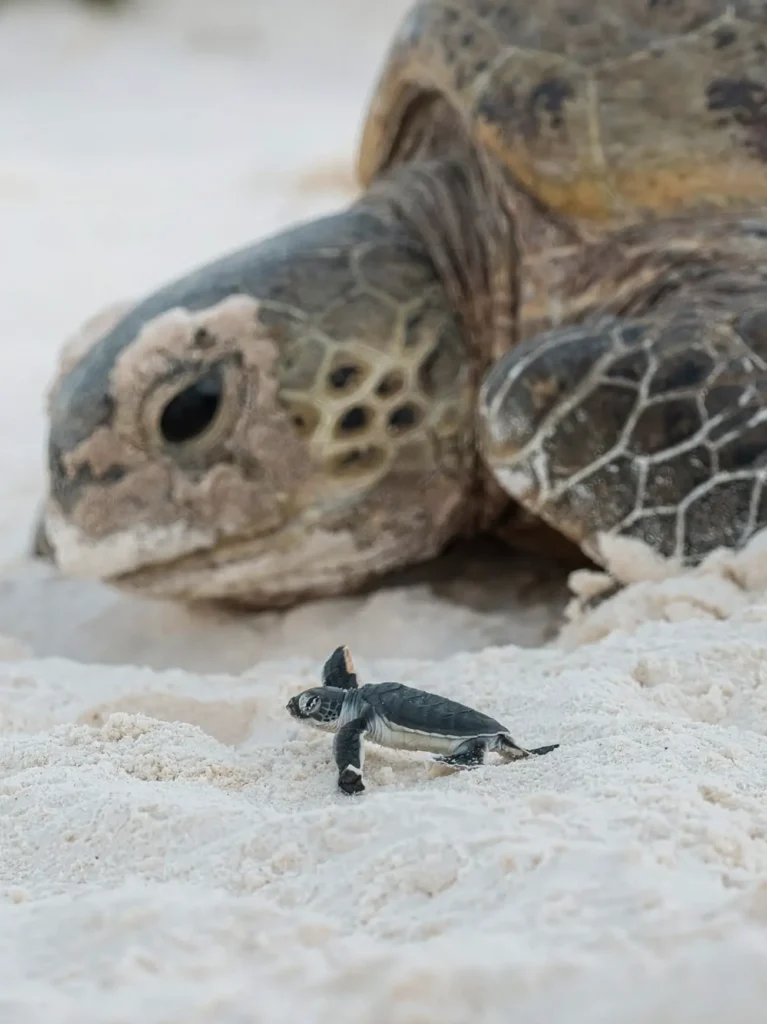
Along much of Queensland’s Reef coast, nesting is concentrated in the warmer months. November and December generally offer stronger nesting potential, while hatchlings become more likely from January into March, sometimes extending into April.
Nesting and snorkelling seasons overlap only partly. Summer offers warm water and breeding activity but also greater humidity, rainfall, tropical-weather risk and marine-stinger precautions in northern waters. The drier months from roughly May to October often provide more comfortable travel and clearer conditions around Cairns and Port Douglas, but they fall outside the main nesting period.
My recommendation is to choose summer for nesting or hatchlings, and choose the best general weather window for your region if the goal is simply to snorkel with turtles.
How Weather, Tide and Crowds Affect Encounters
Calm water improves visibility and reduces swimming effort. Wind creates surface chop, while rainfall and wave action can suspend sediment around inshore islands.
Tide has mixed effects. A rising or high tide may allow turtles onto shallow feeding flats, but deeper water can make them harder to see from the surface. Very low tide may improve visibility in channels while making parts of the reef inaccessible.
Visitor behaviour matters just as much. A turtle may ignore one stationary snorkeller but flee from several fast swimmers approaching from behind. The difference is usually speed, direction and crowding, not whether the turtle is naturally “friendly”.
How to Snorkel Responsibly Around Turtles
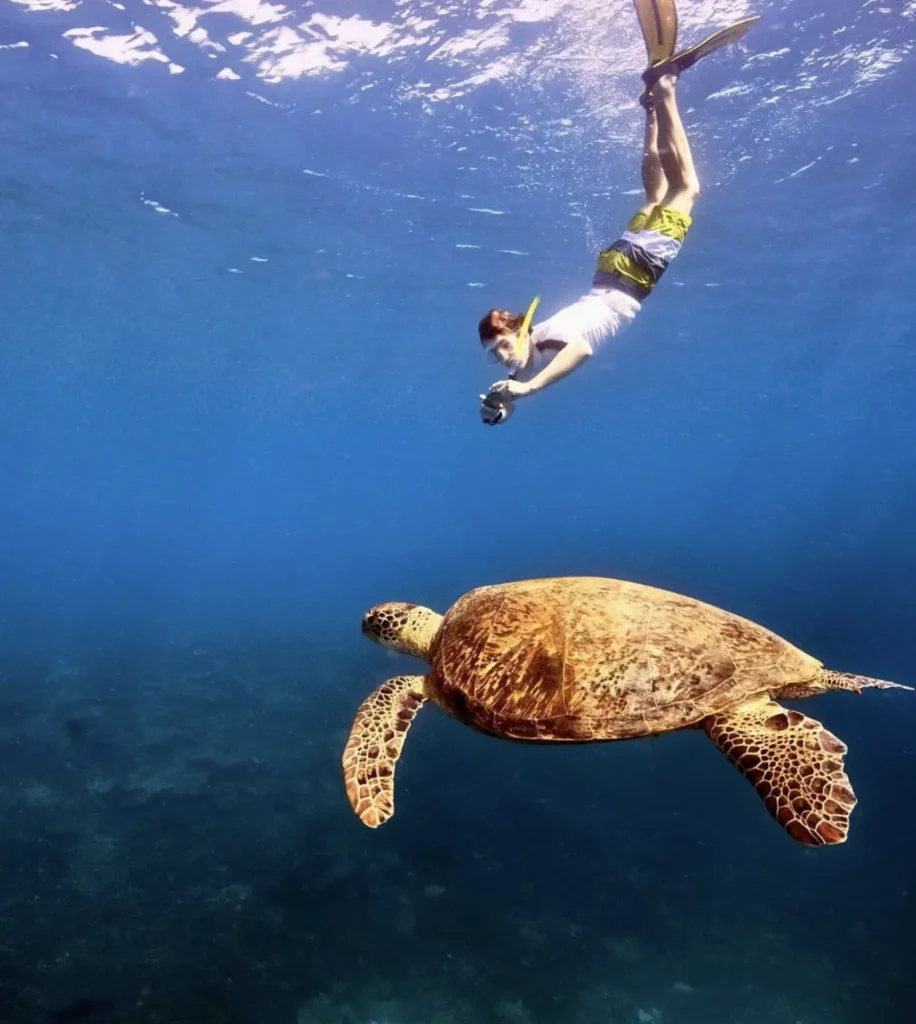
Do not touch, feed, grab, ride or surround a turtle. Stay to one side, avoid blocking its route to the surface and let the animal control the distance.
Do not force a resting turtle from beneath a ledge for a photograph or repeatedly follow a feeding turtle after it changes direction. Nesting females, eggs and hatchlings require stricter protection because lights, noise and obstruction can disrupt breeding.
This is also why eco-certified or Reef-recognised operators can provide a better wildlife experience. Certification does not guarantee more turtles, but well-managed operators are more likely to control group movement, brief guests properly and prevent crowding. Smaller, calmer groups usually produce longer and more natural encounters.
Understanding the Marine Turtle Life Cycle
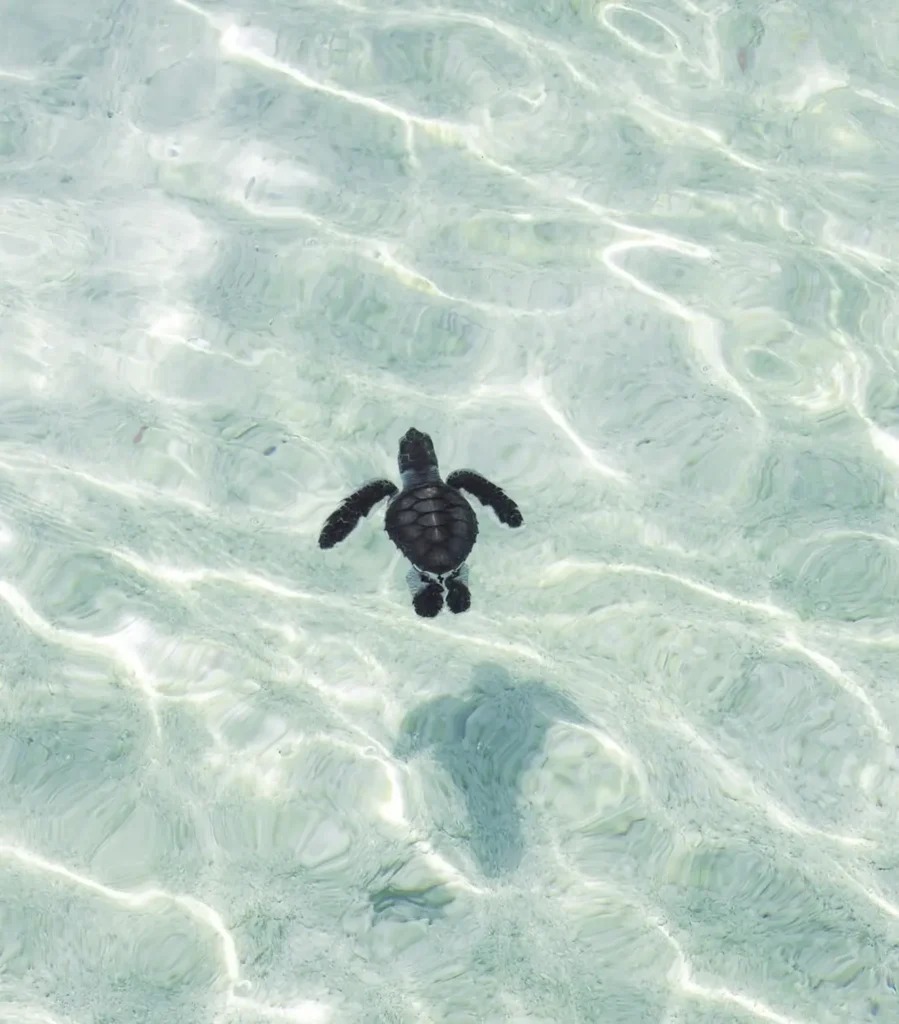
Marine turtles grow slowly and may take roughly 20–50 years to reach sexual maturity, depending on species and population. They can live for several decades, with some individuals exceeding 50 years.
Females commonly lay several clutches during a nesting season. Individual clutches often contain about 80–120 eggs, and incubation usually lasts approximately 45–70 days, depending on species and sand temperature.
These are biological ranges rather than timetable promises. A hatchling tour may still see no emergence because nests do not hatch on schedule for visitors.
Why Raine Island Matters
Raine Island is one of the world’s largest green turtle nesting sites, supporting about 90% of nesting by the northern Great Barrier Reef green turtle population. Despite its global importance, it is a protected research and conservation site with highly restricted public access, making it unsuitable for ordinary tourism.
Is It Worth Planning a Great Barrier Reef Trip Around Turtles?
If turtles are your main priority, I’d recommend choosing Lady Elliot Island or Heron Island over a single outer-reef cruise. If turtles are simply one highlight of your Great Barrier Reef holiday, almost any quality snorkelling trip can provide a rewarding encounter.
At Great Barrier Reef Tours, choosing the right habitat and itinerary will usually have a much greater impact on your chances of seeing turtles than simply booking the most popular tour.
FAQ
Which turtle is most common on the Great Barrier Reef?
Green turtles are the species visitors are most likely to see, particularly around shallow lagoons, reef flats and seagrass meadows. Hawksbills are also regularly encountered on coral reefs, while loggerheads are less common on standard snorkelling trips.
What is the best island for seeing turtles?
Lady Elliot Island offers the highest chance of turtle encounters, with Heron Island a close second. Green Island, Fitzroy Island and Low Isles are easier day-trip alternatives from Cairns and Port Douglas.
What month is best for nesting and hatching?
Nesting is generally strongest in November and December, while hatchlings are most commonly seen from January to March. Exact timing varies by location and season.
How long do Great Barrier Reef turtles live?
Marine turtles live for several decades, with some exceeding 50 years. Their slow maturity makes breeding adults especially important for population recovery.
Can beginners snorkel with turtles?
Yes. Calm conditions, sheltered lagoons and guided snorkelling tours are the best options for beginners, particularly at places such as Low Isles or reef islands.