
Surfers Paradise Gold Coast Guide
Surfers Paradise is the Gold Coast at its absolute loudest, with tower after tower stacked up against the Pacific coast, Surfers Paradise Beach sitting at their base and Cavill Avenue still pulsating long after the sun dips below the horizon. Hotels, restaurants, nightlife and attractions are crammed into a narrow strip of coastline, with a light rail line running straight through the centre of it all.
- Full Day
- 6 Hours

- $ 185 AUD
- $ 165 AUD
- 30 Min
- 30 Min

- $ 70 AUD
- $ 60 AUD
- Half day
- 2.5 — 3 hours

- $ 115.00 AUD
- $ 99.00 AUD
- Full Day
- 7 Hours (approx.)

- $ 130 AUD
- $ 119 AUD
- 1 Hour
- 60m
- $ 124.00 AUD
- $ 114.50 AUD
- 4 hours
- 240 min. (approx.)

- $ 399,00 AUD
- $ 379,00 AUD

High-Energy Tourism
The high-rise skyline starts almost at the water’s edge. Hotels and apartment towers rise right behind the Esplanade, and only one block in, Cavill Mall cuts right through the heart of the action. Shopping, grub and entertainment are all close enough together that you can easily spend your whole stay here and enjoy a highly walkable holiday precinct without needing to move your car.
The Gold Coast light rail system runs right through the middle of Surfers Paradise, heading north towards Main Beach and south along the coast. And while the light rail is a great help, buses cover more ground — just keep an eye on the timetable when you need to head further around the Gold Coast.

Icon Beach & Boardwalk
Surfers Paradise Beach is this long, beautiful strip of sand that curves along the edge of the Pacific Ocean, right beneath the tower blocks. Swimming and general beach time are the main draws here, not surfing as such — though if you’re a beginner, you can get surf lessons and try other water sports.
Now, it’s worth noting that this is a pretty exposed beach, and the conditions can change quickly. So when you do go for a swim, stick to the areas marked by the red and yellow flags, pay attention to the surf safety signs and check the beach conditions and forecast before you head in.
Just about at the end of Cavill Avenue you’ll find the Surfers Paradise sign, which gives you a great view of the beach before you even get there. Then there’s the Esplanade, which runs along the foreshore with plenty of lawn, seats and beach access — and on certain evenings the Surfers Paradise Beachfront Markets come and set up shop along the foreshore.

Nightlife & Entertainment
When the sun goes down, Cavill Ave and the surrounding streets are where the party really gets started. There are bars, clubs and late-night venues almost on top of each other, and spots like Hyde Paradiso and Sandbar Surfers Paradise have ocean views to enjoy with your drink.
But even higher up than all that, there’s Q1, the tower that just keeps on going, up to a whopping 322.5 metres. And if you want a view that really is from on high, there’s the SkyPoint Observation Deck, all the way up on Level 77 — that’s 230 metres in the air. And if you’re feeling really adventurous, SkyPoint Climb lets you take on the tower itself, reaching an incredible 270 metres with the Pacific Ocean stretching out below.

Attractions for All
The vibe in Surfers Paradise tends to be pretty laid-back and easy-going. There are loads of compact local attractions that are perfect for slipping in and out of between sunbathing and dinner. Infinity Attraction, for instance, is an indoor maze that uses lights, sound and all sorts of tricks to create an unusual immersive effect; it’s a great rainy-day activity or simply a way to take a break from the sun.
The Aquaduck, on the other hand, takes a slightly different approach. First it’s a bus on the road, and then suddenly it’s a boat on the water, letting you see the town from a completely new angle — all in about an hour. And, just to put your mind at ease, they give you a safety briefing before you set off.
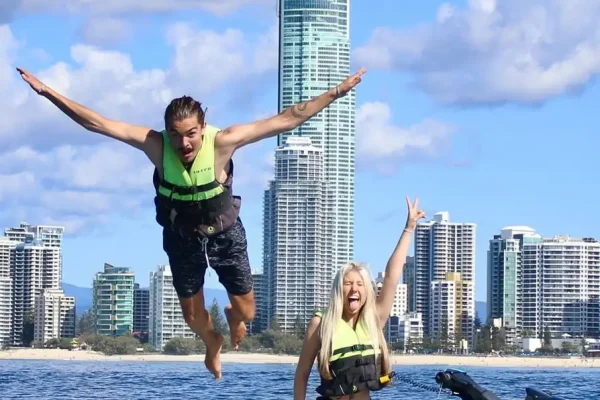
If you prefer to get a bit of a thrill, there are Jet Ski trips and all sorts of other water sports on offer, all after a quick safety induction. And while there are some of the big theme parks just outside town, the real strength of the area is the number of entertainment options within easy reach — you can walk to most of them or take the light rail.

Dining & Stays
It’s hard to find a Gold Coast precinct that packs in as many accommodation options in such a compact area. Peppers Soul puts top-notch apartments right next to the beach; JW Marriott Gold Coast Resort & Spa is a bit further north near Main Beach, not far from the action. Mantra Circle on Cavill and Mantra Crown Towers Surfers Paradise add a bunch of large apartment-style options just a stone’s throw from the centre.
For anyone planning to stay a while, having a fully equipped kitchen in your room and on-site laundry facilities can be a whole lot more important than all the fancy hotel extras. Depending on the type of room you choose, you might get things like air conditioning and an en-suite bathroom, or even a rain shower. Just check what’s actually included in your room before you book.
There’s a trade-off in location, though. While the central entertainment district and beach are just minutes away, along with all the restaurants and nightlife, you’ll also get all the late-night foot traffic that comes with it. Move a few blocks north or south, and you get a quieter place to stay, but the centre remains walkable.
Food-wise, there’s loads to choose from. Cafes and takeaway counters are side by side with hotel restaurants and waterfront bars, and the main dining and nightlife streets include Cavill Mall, Cavill Avenue, Orchid Avenue and the Esplanade.
FAQ
What is Surfers Paradise best known for?
The precinct is best known for its beach, towering coastal architecture, Cavill Mall, nightlife and dense concentration of hotels and attractions. The beachfront sign and Q1 tower are among its most recognisable landmarks.
Is Surfers Paradise good for a beach holiday?
Yes, particularly for travellers who want both the beach and city entertainment within walking distance. Swimming, surf lessons, restaurants, shopping and nightlife are all within a compact area. For swimming, stay in patrolled swimming areas and follow local surf safety advice.
What can you do in Surfers Paradise at night?
Head to the Cavill and Orchid Avenue entertainment area for restaurants, bars and clubs, take in the coast from SkyPoint, or browse the evening beachfront markets when they are operating.
Do you need a car in Surfers Paradise?
Not for the central precinct. The beach, shopping areas, hotels and major local attractions are walkable, while light rail and bus services cover much of the central Gold Coast coastal corridor.
How long should you spend in Surfers Paradise?
Allow two to three days for the beach, SkyPoint, central attractions, dining and nightlife. Stay longer if you’re using the area as a base for exploring the wider Gold Coast.


Experience The Best Of Brisbane
The river is the natural place to start. Ferries and bridges connect the two banks, while riverside walking paths lead between gardens, restaurants and city views.
South Bank Parklands sits directly opposite the Brisbane CBD, bringing together around 15 hectares of parkland, Streets Beach and the Queensland Cultural Centre. Across the river, Queen Street Mall and the 18-hectare City Botanic Gardens offer a mix of busy city streets and quieter waterfront spaces.
Kangaroo Point has some of the best views of the Brisbane skyline and Story Bridge. Nearby, Howard Smith Wharves brings dining and riverside spaces beneath the bridge. New Farm, Fortitude Valley and West End add another mix of parkland, nightlife, leafy streets and charming cafés.

See Brisbane Beyond The City Centre
West of the CBD, Mt Coot-tha Reserve is the place for bushwalking trails, outdoor adventures and panoramic city views, with the 56-hectare Brisbane Botanic Gardens Mt Coot-tha adding another reason to spend time on this side of the city.
Head east and Brisbane meets the bay. Wynnum and Manly have a quieter, more laid-back waterfront feel than the surf coast to the north and south. Further out, Minjerribah (North Stradbroke Island) and Mulgumpin (Moreton Island) bring beaches, walking trails, wildlife and wilder coastal scenery.
Travel inland instead and the Scenic Rim brings mountains, national parks and access to World Heritage-listed rainforests, putting very different landscapes within easy reach of the city.

Food, Art And Culture In Brisbane
South Bank is Brisbane’s main cultural hub. The Queensland Cultural Centre brings the Queensland Art Gallery, Gallery of Modern Art, Queensland Museum, State Library and Queensland Performing Arts Centre together in one convenient riverside cultural precinct. GOMA is also home to the Australian Cinémathèque, where film screenings sit alongside the galleries and exhibitions.
Food and nightlife are more spread out. South Bank works well for riverside dining, while Fortitude Valley mixes restaurants, bars and live music. New Farm has a more relaxed neighbourhood feel built around cafes, and West End is known for independent eateries and a broad mix of international cuisines. Whether the plan is a riverside meal, a night out or a laid-back Brisbane brunch, there are plenty of options.
Brisbane is compact enough to mix art, culture, food and markets into the same day of sightseeing. There is little reason to separate them into dedicated days when the city’s main inner-city precincts fit together so easily.

Make Time For Brisbane
2 to 4 days in Brisbane is a good amount of time for a first visit. Two days gives you enough time to explore the river, South Bank Parklands, the city centre and surrounding neighbourhoods. A third leaves room for Mt Coot-tha or the bayside, while four days makes it easier to add an island trip, the coast or hinterland.
Summer is the hottest and most humid time of year, autumn is milder, winter brings cooler days and evenings, and spring in Brisbane warms up as the jacarandas begin to flower.
You don’t really need a car around central Brisbane. Trains, buses and ferries cover much of the city, while South Bank, the city centre and nearby neighbourhoods are easy to explore on foot. A car becomes more useful for day trips from Brisbane to the coast, hills and surrounding regions.
Accommodation ranges from luxury riverside hotels and central city stays to boutique hotels and apartments in the inner suburbs. That leaves plenty of choice between nightlife, river views and a quieter base.