
Hamilton Island Travel Guide
Hamilton Island sits in the Whitsunday Islands, just off the coast of the Great Barrier Reef. A pretty handy thing about Hamilton Island is that you can fly into Hamilton Island Airport (HTI). From there, things are relatively low-key. There are electric buggies to replace hired cars, Catseye Beach runs along the eastern side of the island, and the marina is just a short hop across the island.
- 60 min.

- $ 635 AUD
- $ 335 AUD
- 60 min.
- $ 635 AUD
- $ 335 AUD
- Half day
- 7 hours

- $ 572 AUD
- $ 472 AUD
- 60-minute

- $ 533 AUD
- $ 335 AUD
- 1 Day
- Returns: 4.30pm

- $ 238 AUD
- $ 138 AUD
- 60 min.

- $ 365 AUD
- $ 335 AUD

A Resort Island You Can Fly Into
Flying into Hamilton Island Airport (HTI) means you land right on the island itself, rather than at the end of a mainland transfer. Just don’t get it confused with Whitsunday Coast Airport (PPP), which is actually in Proserpine.
What sort of transfer or other extras you get when you book will depend on where and how you book, so be sure to check the current rules and conditions.
Hamilton Island is actually two quite different places in one spot. The main hotels and Catseye Beach all face the Coral Sea on the eastern side; meanwhile, the western shore features Marina Village, which brings together shops, cafes, and restaurants around the harbour. Then, at one end, there’s the really eye-catching Hamilton Island Yacht Club, where you’ll also find the upmarket Bommie Restaurant, while Popeye’s Takeaway is a more low-key option just down the road.

Getting Around By Buggy And Shuttle
Electric buggies are everywhere. They suit the steep roads and short distances particularly well, and become more useful the higher your accommodation sits above the waterfront. Drivers need to meet licence requirements; during school holidays and other busy periods, it’s sensible to book ahead.
For many stays, though, a buggy is optional. The complimentary Island Shuttle links the main resort and marina areas, and much of the Catseye Beach precinct is walkable.
There is good walking beyond the resort roads, too. The Scenic Trail network cuts through the island’s bushland and reaches quieter stretches of the coast, such as Coral Cove.

Catseye Beach, Pools And Island Wildlife
Catseye Beach changes noticeably with the tide. At low water, broad tidal flats stretch away from the sand; as the tide rises, swimming and paddling shift closer to shore.
On suitable days, stand-up paddleboards and kayaks head out across the bay, while snorkelling gear gives a closer look at the local marine life.
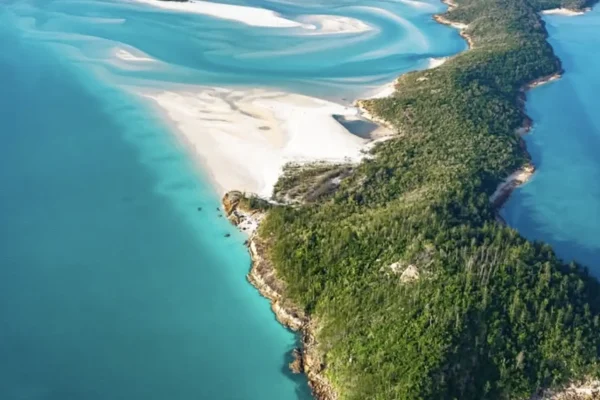
This isn’t Whitehaven Beach in miniature. Whitehaven’s brilliant silica sand lies elsewhere in the Whitsundays and warrants its own trip, including departures such as a Whitehaven Beach Half Day Cruise.
Back at the resort, large resort pools sit close to the beach. More exclusive properties have their own swimming areas, including infinity pools, with access tied to the booked accommodation.
Hamilton Island Wildlife Centre brings koalas and other Australian animals into the resort precinct. For families, the Clownfish Club runs children’s programs subject to age, availability and current operating arrangements.

Reef, Golf And Time To Slow Down
Beyond the island are the reefs and channels that make this part of Queensland so distinctive. Diving and snorkelling head towards the Great Barrier Reef; sailing, Dinghy Hire and paddling stay closer to the sheltered waters of the Whitsundays.
Heart Reef makes more sense from above than from sea level. Hamilton Island Air runs scenic flights across the reef, including Reef Discovery Fly Both Ways, with routes naturally subject to weather and operating conditions. A Sea Kayak Sunset Paddle keeps the perspective much closer to the water.
Golf has its own island. Hamilton Island Golf Club occupies neighbouring Dent Island, reached by boat from Hamilton Island. Its 18-hole championship golf course rolls across steep, exposed country, with fairways looking over the Whitsundays and Coral Sea. Wind matters here as much as the scenery.
Spa treatments provide a slower counterpoint, with both individual and couples’ sessions available.

From Family Stays To Qualia
Accommodation ranges from big resort rooms and tropical bungalows to apartments and secluded luxury pavilions.
Reef View Hotel rises behind the beach, close to the main pools and resort facilities, with rooms suitable for couples and families. Nearby, Palm Bungalows spread through tropical gardens in a much lower-rise setting.
Self-contained apartments and holiday homes bring kitchens and larger living spaces into the mix. For families, groups or longer stays, that extra room can matter more than hotel services. Check the address before booking: some properties climb well above the waterfront, where having a buggy becomes far more attractive.
Beach Club takes a quieter, adults-only position directly on Catseye Beach. At the northern end of Hamilton Island, Qualia is deliberately removed from the main resort precinct, with private pavilions and guest-only facilities. Its Long Pavilion looks out across water and islands rather than back towards the bustle of the resort.
Details such as airport transfers, WiFi and pool access, and other complimentary inclusions vary between properties and booking categories, so check what is included with the room rather than assuming island-wide benefits.
FAQ
How many days do you need on Hamilton Island?
You should plan for at least 3 or 4 nights on your first trip to Hamilton Island. This gives you enough time to experience the beach, hit the resort pools and Marina Village, fit in a Great Barrier Reef or Whitehaven Beach trip and maybe squeeze in some golf, a spa day or just chill out on the island for a bit.
Do you need a buggy on Hamilton Island?
You don’t have to have a buggy – the free Island Shuttle gets you around to the main resort and marina areas, and the beach is also pretty walkable. A buggy becomes more practical if you’re based in a hillside apartment or holiday home and making multiple trips across the island.
Which airport do you fly into for Hamilton Island?
You need to fly into Hamilton Island Airport (HTI), which is actually on the island — don’t get confused with Whitsunday Coast Airport (PPP) over at the Queensland mainland.
What is the best area to stay on Hamilton Island?
If you want to be in the thick of it, the Catseye Beach precinct is a good bet – it’s close to the beach, pools and main resort facilities. If you prefer something a bit more laidback, Beach Club is geared towards adults who just want to chill out by the beach, while Qualia is tucked away on a secluded corner of the island.
Can you visit the Great Barrier Reef from Hamilton Island?
You can indeed get to the Great Barrier Reef from Hamilton Island, whether you want to go diving, snorkelling or sightseeing from the air. Whitehaven Beach and Heart Reef are also within reach, though you’ll need to check the particular trip and weather conditions to see what’s on offer.
Popular Places to Visit

Experience The Best Of Brisbane
The river is the natural place to start. Ferries and bridges connect the two banks, while riverside walking paths lead between gardens, restaurants and city views.
South Bank Parklands sits directly opposite the Brisbane CBD, bringing together around 15 hectares of parkland, Streets Beach and the Queensland Cultural Centre. Across the river, Queen Street Mall and the 18-hectare City Botanic Gardens offer a mix of busy city streets and quieter waterfront spaces.
Kangaroo Point has some of the best views of the Brisbane skyline and Story Bridge. Nearby, Howard Smith Wharves brings dining and riverside spaces beneath the bridge. New Farm, Fortitude Valley and West End add another mix of parkland, nightlife, leafy streets and charming cafés.

See Brisbane Beyond The City Centre
West of the CBD, Mt Coot-tha Reserve is the place for bushwalking trails, outdoor adventures and panoramic city views, with the 56-hectare Brisbane Botanic Gardens Mt Coot-tha adding another reason to spend time on this side of the city.
Head east and Brisbane meets the bay. Wynnum and Manly have a quieter, more laid-back waterfront feel than the surf coast to the north and south. Further out, Minjerribah (North Stradbroke Island) and Mulgumpin (Moreton Island) bring beaches, walking trails, wildlife and wilder coastal scenery.
Travel inland instead and the Scenic Rim brings mountains, national parks and access to World Heritage-listed rainforests, putting very different landscapes within easy reach of the city.

Food, Art And Culture In Brisbane
South Bank is Brisbane’s main cultural hub. The Queensland Cultural Centre brings the Queensland Art Gallery, Gallery of Modern Art, Queensland Museum, State Library and Queensland Performing Arts Centre together in one convenient riverside cultural precinct. GOMA is also home to the Australian Cinémathèque, where film screenings sit alongside the galleries and exhibitions.
Food and nightlife are more spread out. South Bank works well for riverside dining, while Fortitude Valley mixes restaurants, bars and live music. New Farm has a more relaxed neighbourhood feel built around cafes, and West End is known for independent eateries and a broad mix of international cuisines. Whether the plan is a riverside meal, a night out or a laid-back Brisbane brunch, there are plenty of options.
Brisbane is compact enough to mix art, culture, food and markets into the same day of sightseeing. There is little reason to separate them into dedicated days when the city’s main inner-city precincts fit together so easily.

Make Time For Brisbane
2 to 4 days in Brisbane is a good amount of time for a first visit. Two days gives you enough time to explore the river, South Bank Parklands, the city centre and surrounding neighbourhoods. A third leaves room for Mt Coot-tha or the bayside, while four days makes it easier to add an island trip, the coast or hinterland.
Summer is the hottest and most humid time of year, autumn is milder, winter brings cooler days and evenings, and spring in Brisbane warms up as the jacarandas begin to flower.
You don’t really need a car around central Brisbane. Trains, buses and ferries cover much of the city, while South Bank, the city centre and nearby neighbourhoods are easy to explore on foot. A car becomes more useful for day trips from Brisbane to the coast, hills and surrounding regions.
Accommodation ranges from luxury riverside hotels and central city stays to boutique hotels and apartments in the inner suburbs. That leaves plenty of choice between nightlife, river views and a quieter base.