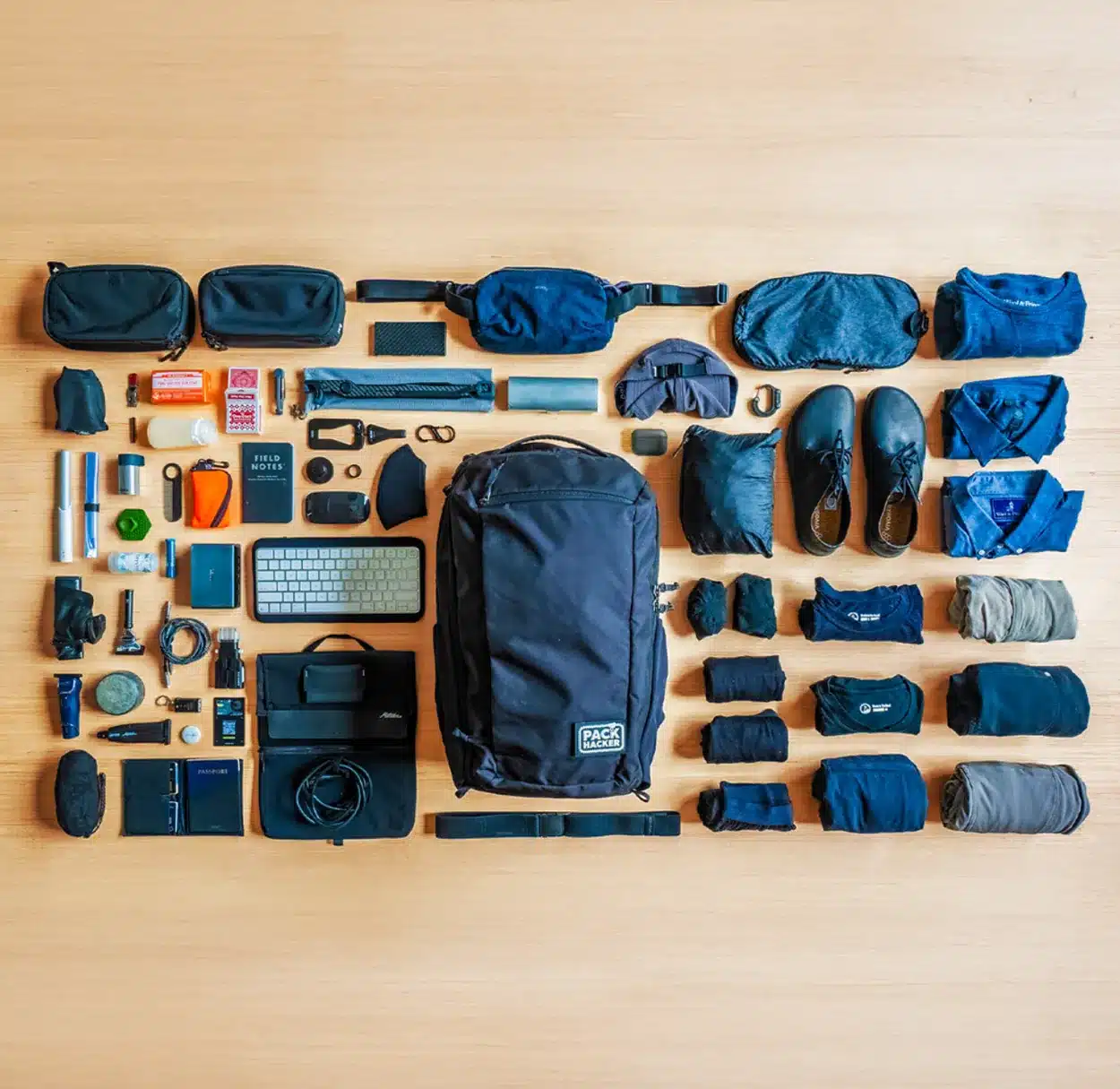
A K’gari packing list: what to bring largely depends on how you plan to get around the island, still widely known as Fraser Island. A guided tour passenger can get away with a small bag; a self-drive traveller or beach camper will need to bring more food, water & equipment.
A day exploring around Lake McKenzie, Eli Creek & the Maheno Shipwreck is an easy one – you can probably leave most of the heavy gear at home. On the other hand, if you’re setting up camp on Seventy-Five Mile Beach, it’s a whole different story. I think it makes sense to get a feel for what kind of trip you’re in for before you start packing; it saves buying all that “just in case” gear later.
Pack for How You Travel
For a guided day tour, focus on packing sunscreen, a hat, sunglasses, a refillable water bottle, swimwear, a towel, some comfy shoes & some insect repellent. If you’re heading to Lake McKenzie and Eli Creek, swimwear & a quick-dry towel are basically essentials, but if you’re going to the Maheno Shipwreck, then protection from the sun is what you really need.
Overnight tours will require some extra gear, but check what the tour company supplies before you start packing bedding or cooking gear. Some operators, like Dingo’s, have strict rules about what you can bring (e.g., a 10 kg soft bag for camping guests). That’s not a rule that applies to the whole island, but it’s still worth keeping in mind.
Self-drive visitors have a bit more leeway but also a lot more responsibility. If you’re heading on a longer trip to Indian Head or Champagne Pools, do a quick check of what the vehicle is already carrying & try to avoid doubling up on bulky items. Two shovels are definitely two shovels though.
Keep Day Trips Light
A day on K’gari needs a compact bag, not overnight luggage. Prioritise Sun Protection, water, swimwear, towel, medication and suitable footwear.
Mobile coverage is intermittent, so download bookings and other useful information before leaving areas with reliable reception. Whether you depart from Rainbow Beach or Hervey Bay, do not assume you can sort the essentials later from your phone.
If an item is unlikely to come out of the bag between the ferry and the return crossing, question whether it needs to come at all.
Add Only Overnight Essentials
An accommodation stay usually means toiletries, another set of clothes and a warmer layer. Coastal temperatures average roughly 14–21°C in July, so winter evenings can justify a jumper; December’s 22–28°C range shifts the focus back to lightweight clothing and sun protection.
The real split is room versus campsite. Resort guests may have towels, laundry and shops within reach. Campers may handle shelter, cooking, water, and secure food storage themselves.
Travel style
Pack around
Usually check before bringing
Guided day tour
Sun protection, water, swimwear, towel
Food, large bags, extra equipment
Overnight tour
Personal gear, toiletries, extra clothing
Bedding, meals, camping equipment
Resort stay
Clothing, medication, personal items
Towels, food supplies, bulky extras
Self-drive stay
Personal gear, food, water, vehicle essentials
What the rental already includes
Independent camping
Shelter, cooking, water and secure storage
Exact campground facilities
That distinction matters more than the number of nights.
Dress for Exposure
A broad-brimmed hat, sunscreen, sunglasses and lightweight clothing cover most days. Add a long-sleeved layer for sun protection and warmth, and rain gear only when the forecast warrants it.
Footwear should match the day. Comfortable walking shoes or supportive sandals are enough for most guided sightseeing; technical hiking footwear is only necessary if longer walks are genuinely part of the plan.
K’gari already provides enough sand. There is no need to bring half a shoe cupboard with you.
Plan Food and Water
Queensland Parks advises bringing your own drinking water. Water is available at Central Station, Dundubara, Waddy Point, and Eurong, but not all sources are immediately drinkable.
Guided travellers should first check whether meals and water are included. Campers and self-drivers need more margin: bring an initial supply and proper containers rather than planning around convenient refills.
For longer beach or off-grid camping, a portable fridge can be worth the space if the power setup can support it. A solar panel or portable power system belongs in the same category — useful for longer independent stays, overkill for a short tour or resort visit.
Food is available in serviced areas, but distance changes the value of that fact. A shop elsewhere on the island is not much help when you are camped well away from it.
Wongari — dingoes — also shape the food setup. Queensland Parks’ be-dingo-safe rules require food, rubbish and bait to be secured. For campers, sturdy sealable storage is not a neatness exercise; it is part of the basic setup.
I’d buy the core camping supplies before crossing from Rainbow Beach or Hervey Bay and use island shops for top-ups.
Let the Campsite Decide
Not every overnight visitor needs camping gear, and not every campground calls for the same kit.
Waddy Point has flushing toilets and hot showers, but the showers cost A$2 per use. Other sites can be much more basic, so check the exact facilities before packing. A two-dollar coin is a small thing to forget, and an irritating one at that.
For tent camping, Queensland Parks recommends sand pegs for sandy ground. Extra ropes or a tarp can help at more exposed sites, while a beach shelter suits longer camps better than quick overnight stops.
Plan to cook around a stove rather than a campfire, as fires are heavily restricted across K’gari.
Pack Hard-to-Replace Items First
Prescription medication outranks spare clothing. K’gari has no resident doctor or pharmacy, and medical assistance can take hours to reach some visitors, so bring enough for the full stay. A first-aid kit also makes sense for camping and independent travel.
A charged phone and power bank are useful even when reception is patchy. Keep bookings, maps and other essential information available offline.
Self-drivers should also save a current tide chart when beach travel is involved, particularly around Seventy-Five Mile Beach, Indian Head and Champagne Pools. That is simply information you already know you will need, stored before signal becomes uncertain.
My rough hierarchy is simple: if forgetting it can derail the day, it goes near the top. If the consequence is wearing the same T-shirt twice, it can wait.
Check What Is Supplied
Before setting off from the mainland, make sure you’ve got all the bits covered with your booking. Check over this:
Do you get towels and bedding as part of the deal?
Will meals and drinking water be provided, or do you need to bring your own?
Is a tent or camping gear included — and if you do need to take care of it, what kind of gear are you looking at?
Will someone supply cooking gear, or do you need to bring your own?
What about luggage storage and essential vehicle equipment — is that all sorted too?
Some operators may have a super strict 10kg soft-bag limit, while resort places might be far more generous. Pack for your booking, not for some mythical generic list of everything anyone might need.
Sunscreen, a hat, sunglasses, a water bottle, swimwear, a towel, decent shoes, some insect repellent, your meds, and your phone are good essentials to start with. And don’t forget to check whether food and water are provided.
Yes, you do. Even in the winter months when the coastal temperature drops to around 14-21°C in July, you’ll want a warm top for when the sun goes down. In the summer, it’s all about keeping cool, so pack lightweight gear and plenty of sun protection.
Not necessarily. We’ve got shops in some of the serviced areas, and some guided tours even include meals, so you might not need to bring as much food as you think. Independent campers, you should bring your main stuff and use the island shops as a backup just in case.
Only if your accommodation actually needs it. If you’re staying at a resort or on an organised tour, it’s likely they’ll have most essentials covered. But if you are camping independently, make sure you check with the site first to see what gear, if any, you’ll need to bring.
Yes, it’s a good idea to bring one — especially if you’re camping or staying overnight. It means you’ll be able to keep your phone charged so you can check offline maps, bookmark sites, take photos, and save tide times when charging points are scarce.
Related Tours
Full day
7 hours
Aqua Oasis Cruise with Lunch K'Gari from Hervey Bay